Measured Foundations
Positions, distances, spectral classifications, and physical properties are grounded in established astronomical catalogues including ESA Gaia DR3, Hipparcos, and NASA/IPAC mission archives.

SCIENTIFIC CONTENT · OBSERVATION & SIMULATION
Our Visible Universe unites catalogued astronomical measurements with physically grounded models where direct imaging is incomplete.
02 / 03 · MEASURED ASTROMETRY
Star coordinates, distances, temperatures, and exoplanet orbital parameters are derived from ESA Gaia DR3, Hipparcos, and the NASA Exoplanet Archive.
ESA Gaia DR3
Planck Blackbody
03 / 03 · RELATIVISTIC OPTICS
Extreme gravitational fields, raymarched nebulae, and cosmological simulations are clearly distinguished from direct telescopic photographs so learners always know what is observed versus modeled.
100K+
Gaia DR3 Stars
2.7255 K
CMB Blackbody
5,500+
Exoplanet Archive
60 FPS
Kerr Raymarching
OBSERVATIONAL & COMPUTATIONAL METHODOLOGY
CATALOGUED MEASUREMENTS · INTERPRETIVE PHYSICS MODELS
Positions, distances, spectral classifications, and physical properties are grounded in established astronomical catalogues including ESA Gaia DR3, Hipparcos, and NASA/IPAC mission archives.
Planet and moon motion introduces real orbital relationships, while close-range inspection supports comparative planetology across rocky worlds, gas giants, ring systems, and confirmed exoplanets.
Blackbody spectral classes (OBAFGKM), stellar lifetimes, and remnants illustrate how stars evolve. Galaxy views connect morphology, rotation curves, and hosted star systems to large-scale cosmic structure.
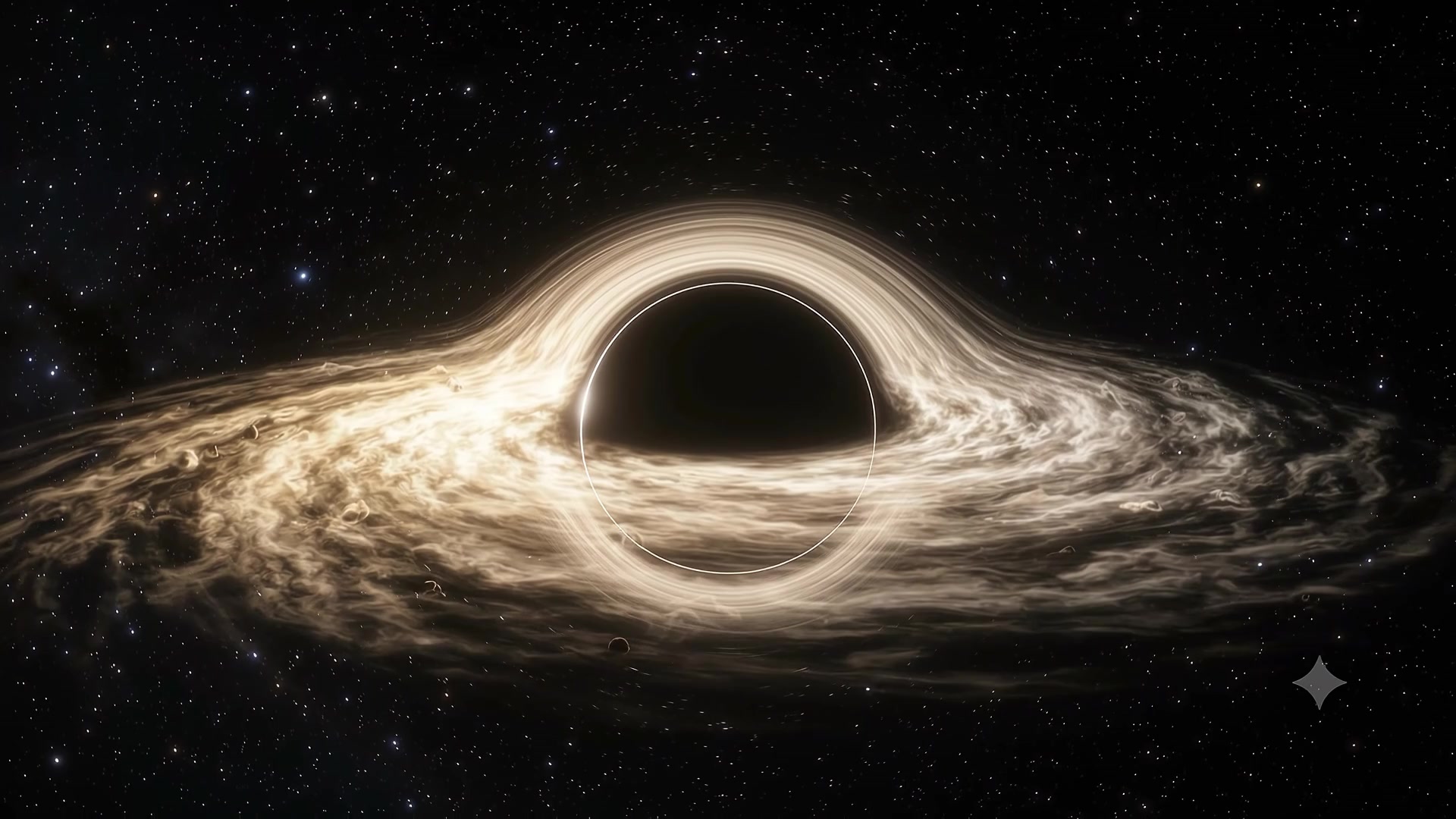
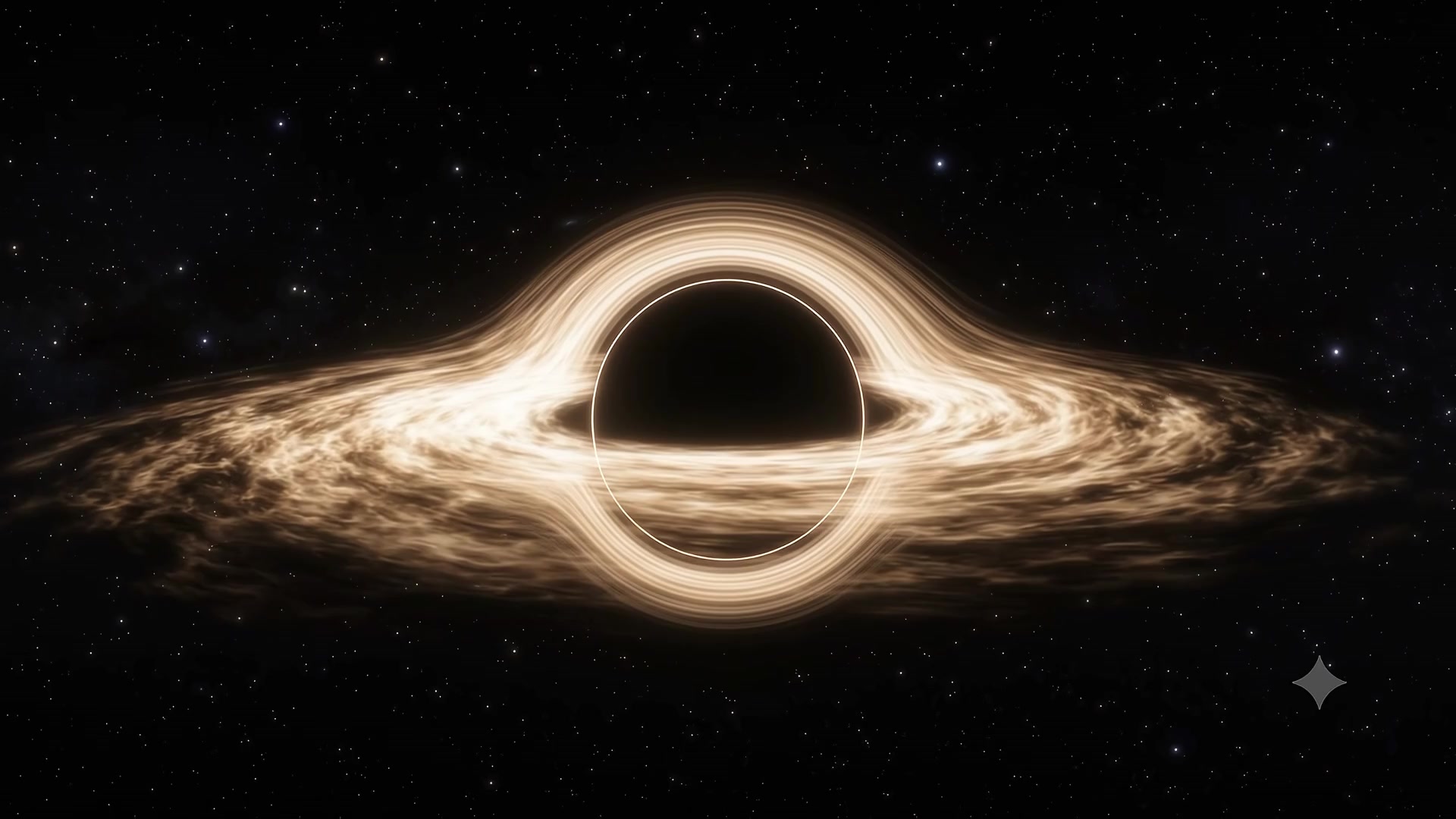
Rotating Kerr black holes, quasars, pulsars, and relativistic accretion structures are rendered with physically inspired models of gravitational lensing, frame-dragging, and Doppler beaming.
Space spans scales and luminosity ratios that cannot be shown literally on a single display. Presentation magnification and procedural detail keep celestial bodies legible while preserving physical relationships.
When no confirmed planetary system is available for a distant star, a hosted system is explicitly marked as modelled to support exploration—never misrepresented as a confirmed observational discovery.
COSMIC EVOLUTION ·EPISTEMIC CLARITY
COBE/FIRAS, WMAP, and Planck blackbody spectrum measurements anchoring early-universe thermal equilibrium.
Big Bang Nucleosynthesis (BBN) light-element abundances and high-redshift spectroscopic detections from JWST.
IllustrisTNG-inspired magnetohydrodynamic dark-matter and baryonic structure formation snapshots across cosmic time.
The Big Bang is modeled strictly as the FLRW metric expansion of space itself—never as an explosion into pre-existing space.

01 / 02 · GENERAL RELATIVITY
Cosmic evolution is modeled strictly according to General Relativity as the expansion of spacetime itself, anchored by the 2.7255 K CMB blackbody spectrum.
02 / 02 · INTERACTIVE OBSERVATORY
Transition from scientific documentation directly into the 3D relativistic simulator or the 24-module Cosmic Learning Academy.