OBSERVATORY CURRICULUM · STAGE 01 TO 06
Cosmic LearningAcademy.
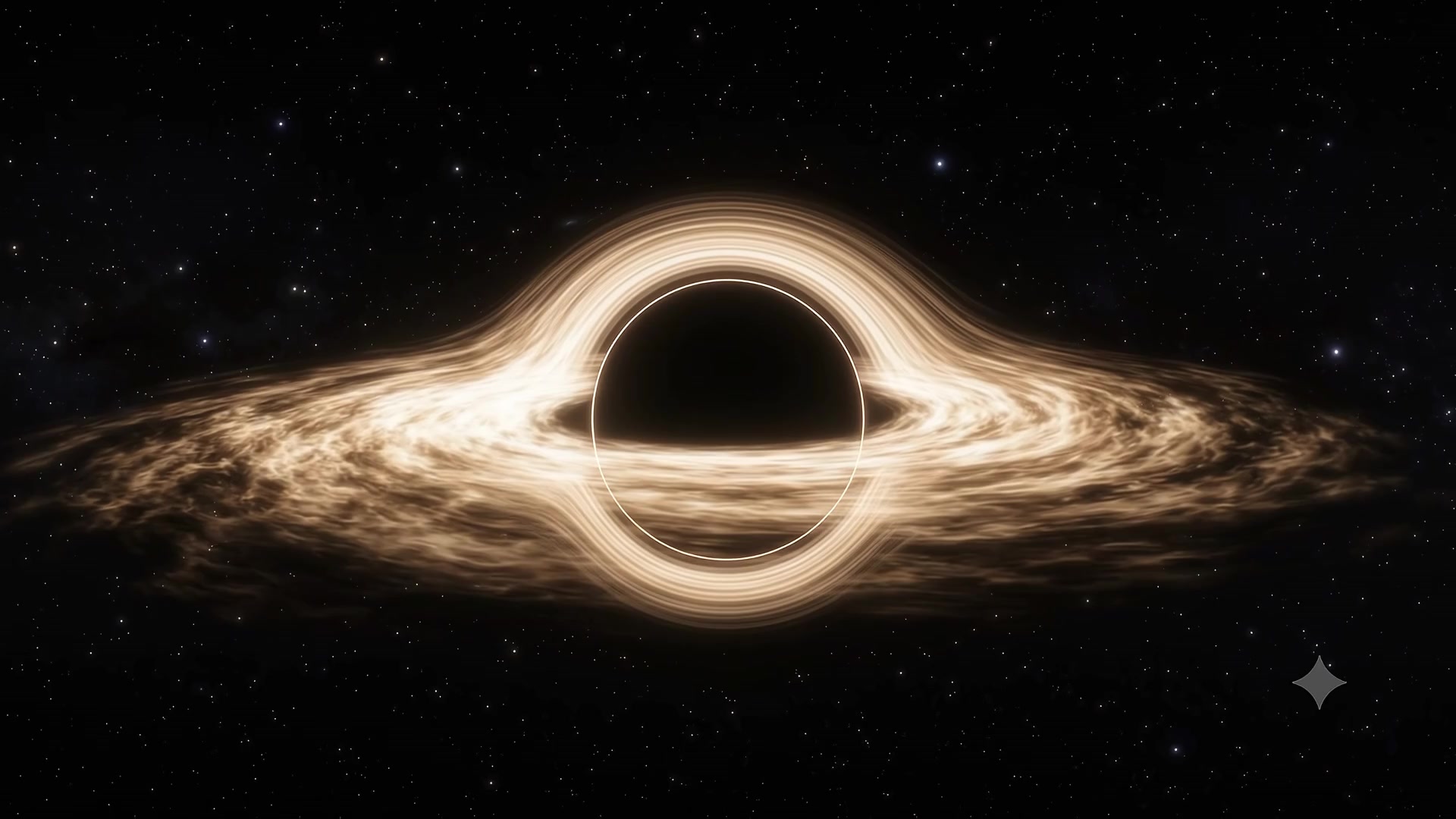
From Earth's orbital neighborhood to relativistic Kerr singularities and the cosmic web. Scroll smoothly to scrub through spacetime.
02 / 03 · ADAPTIVE ASTROPHYSICS
Six Progressive Celestial Stages
Every module dynamically adapts across three cognitive depth tiers (Ages 6–9, 10–13, and 14–16+) with interactive 3D physics labs and voice narration.
Ages 6–9
Ages 10–13
Ages 14–16+
03 / 03 · VERIFIABLE CREDENTIALS
Official Cosmic Explorer Certification
Complete interactive laboratory evidence across all 6 stages and pass the 20-question Capstone Assessment to claim your cryptographically verifiable certificate.
24
Interactive Modules
06
Celestial Stages
03
Cognitive Tiers
100%
Free Sanctuary
Guest Observatory Session
All 24 interactive modules and 3D physics labs are open immediately. Sign in to sync verified stage badges and claim your official Cosmic Explorer credential.
COGNITIVE CALIBRATION · 03 DEPTH TIERS
Select Curriculum Depth
Module 01: Our Place in the Universe
The essential starting point for all cosmic explorers.
INTERACTIVE FLIGHTPATH · 06 CELESTIAL SECTORS
Six Celestial Destinations
OBSERVATORY DOSSIER · Space Explorer
Guest Explorer
LOCAL GUEST SESSION
0 / 24
00 / 06
0
Discovering Space
Earth and stars
Remaining modules: #01, #02, #03, #04
VERIFIED CREDENTIALS · 06 MILESTONES
Cosmic Achievement Gallery
STAGE 01
First Stargazer
STAGE 02
Solar Navigator
STAGE 03
Stellar Explorer
STAGE 04
Galactic Voyager
STAGE 05
Cosmic Historian
STAGE 06
Space Scientist
01 / 02 · RELATIVISTIC LABORATORIES
Experiment With Spacetime.
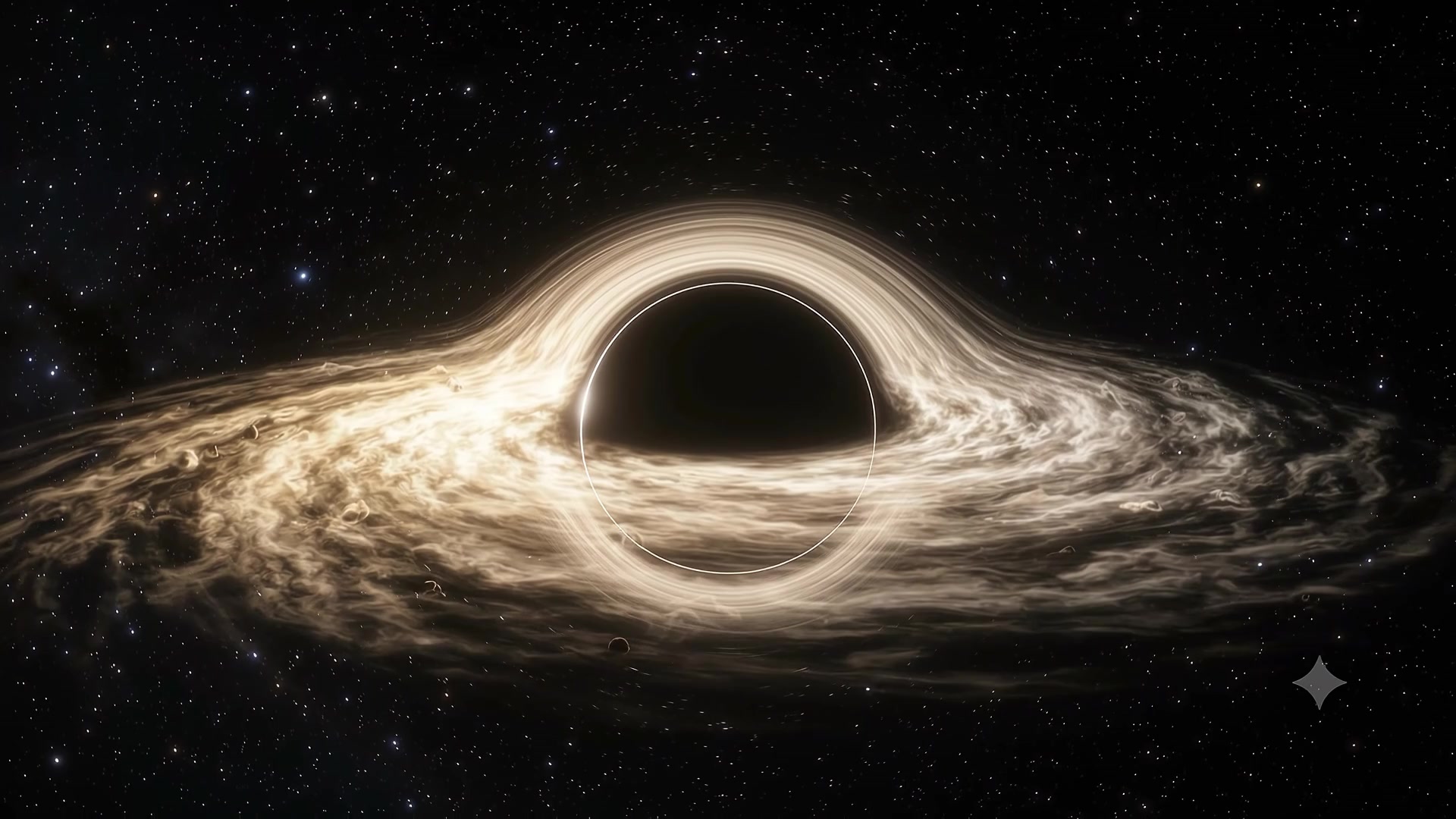
Manipulate orbital mechanics, blackbody spectra, gravitational wave chirps, and relativistic accretion disks directly inside your browser.
02 / 02 · AUTHORITATIVE CREDENTIALING
Earn Your Cosmic Explorer Credential.
Complete all 24 modules across 6 celestial stages and pass the 20-question Capstone Evaluation to unlock your verifiable certificate.
COMPLETE SYLLABUS · 24 INTERACTIVE MODULES
Cosmic Learning Registry
06 PROGRESSIVE CELESTIAL STAGES · 3 AGE TIERS
Discovering Space
Begin at home on Earth and orient yourself with the constellations, cosmic distance scales, and how light connects us to space.
Our Place in the Universe
From your home city to the cosmic web
Zoom through eight orders of cosmic magnitude to understand our celestial address in the cosmos.
The Night Sky & Constellations
Navigating star patterns across ancient and modern skies
Learn how humans mapped the heavens into 88 official constellations and how the sky shifts with Earth's rotation.
Cosmic Distances & Scale
Astronomical Units, Light-Years and Parsecs
Grasp the mind-bending gulfs of empty space between worlds and why standard kilometers fail in deep space.
Light, Time & Cosmic Observation
Looking outward is looking backward in time
Discover why the speed of light turns every telescope into a genuine time machine.
Our Cosmic Neighborhood
Explore the Sun, Earth, Moon, rings of Saturn, Jupiter's moons, and the gravitational laws that bind celestial bodies in orbit.
Earth, Moon & Eclipses
Orbital choreography of our home world and satellite
Explore lunar phases, tidal locking, and the rare geometry that produces solar and lunar eclipses.
Explore the Solar System
From rocky infernos to gas giants and icy dwarf planets
Tour the 8 major planets, asteroid belt, Kuiper belt, and distant icy comets orbiting our central star.
The Sun: Our Star
The nuclear fusion powerhouse that fuels life
Peer inside the Sun's core, radiative zone, convection cells, and dynamic magnetic flares.
Gravity, Orbits & Motion
Kepler's laws, Newton's universal gravity, and orbital mechanics
Understand why planets fall around the Sun without crashing, and how spacecraft navigate using gravitational slingshots.
The Life of Stars
Witness the birth, dramatic lives, and explosive deaths of stars, glowing nebulae, and thousands of discovered exoplanets.
Stars: Colors, Sizes & Temperatures
Spectral classification from red dwarfs to blue supergiants and the H-R diagram
Explore 3D stars in the comparison museum, test blackbody Planck curves, and navigate the Hertzsprung-Russell diagram.
Birth, Life & Death of Stars
From molecular clouds to white dwarfs, supernovae, and remnants
Follow the dramatic evolutionary trajectories determined purely by a star's initial birth mass.
Nebulae & Star Clusters
Stellar nurseries, emission clouds, and ancient globular swarms
Explore the glowing gas and dust clouds where new star systems coalesce into open and globular clusters, and decode the science of astronomical imaging filters.
Exoplanets & Alien Worlds
Transit photometry, radial velocity, and the search for habitable zones
Discover thousands of confirmed worlds beyond our solar system: model transit light curve dips, track stellar Doppler wobbles, and chart circumstellar habitable zones with NASA data.
Galaxies & Extreme Objects
Examine spiral, elliptical, and colliding galaxies, alongside relativistic black holes, neutron stars, and mysterious dark matter.
Learn About Galaxies
Spiral, elliptical, and irregular island universes
Inspect the morphology, stellar populations, and central supermassive black holes of the Milky Way, Andromeda, and deep sky galaxies.
Black Holes & Neutron Stars
Extreme Objects Laboratory: event horizons, lensing, pulsars, and gravitational waves
Investigate physics at the extremes: white dwarfs vs neutron stars, relativistic black hole gravitational lensing, pulsar magnetic beams, and gravitational-wave ripples in spacetime.
Galaxy Groups, Clusters & Cosmic Web
The largest gravitationally bound structures, cosmic filaments, and empty supervoids
Explore the grandest architecture of the universe: from the Local Group and Virgo Cluster to Laniakea, the Boötes Supervoid, and the cosmic web scaffolding.
Dark Matter & Dark Energy
The 95% invisible universe dictating cosmic destiny
Explore the astronomical evidence from galactic rotation curves and accelerating expansion that revealed unseen forces.
Understanding the Universe
Unravel the Big Bang, expanding spacetime, 13.8 billion years of visible universe history, and the ultimate future of the cosmos.
Big Bang & Cosmic Evolution
From inflation and primordial nucleosynthesis to the first stars
Trace the 13.8-billion-year chronology from Planck time and recombination to the modern cosmic era.
The Expanding Universe
Hubble-Lemaître law, cosmological redshift, and metric expansion
Learn how galaxies drift apart as spacetime itself stretches, shifting ancient light into longer red wavelengths.
Visible Universe History
How human understanding of the cosmos changed from antiquity to the modern frontier
Trace the evolution of human cosmological models: from Eratosthenes and Ptolemaic epicycles to Islamic mathematics, Copernican heliocentrism, Kepler, Newton, Hubble, and modern astrophysics.
The Future of the Universe
From stellar evolution and Milkomeda to the Degenerate Era, Heat Death, and cosmic fate
Journey across logarithmic timescales into deep cosmic time: explore the Sun's post-main-sequence evolution, the collision of galaxies, declining star formation, the 5 physical eras of Adams & Laughlin, and the thermodynamic fate of spacetime.
Become a Space Scientist
Operate space telescopes, study astrobiology and the search for extraterrestrial life, and test your skills in interactive challenges.
Telescopes & How We Discover Space
Refractors, reflectors, interferometry, and multi-wavelength space observatories
Command a virtual observatory: test optical diffraction, manipulate wavelengths from radio to X-ray, decode stellar spectra, and master astronomical discovery.
Space Missions & Human Exploration
Sputnik, Apollo, Voyagers, Mars rovers, Chandrayaan, and deep space trajectories
Inspect 3D procedural spacecraft models, navigate solar system mission paths, master gravitational slingshots, and design interplanetary trajectories.
Life Beyond Earth & Astrobiology
Extremophiles, ocean worlds, circumstellar habitable zones, biosignatures, and the search for life
Design hypothetical planets in a 3D habitable world laboratory, probe subsurface oceans on Europa and Enceladus, analyze atmospheric biosignatures, and evaluate astrobiology mission data with rigorous scientific evidence standards.
Cosmic Physics Laboratory & Challenges
Interactive simulations, orbital puzzles, and master challenges
Synthesize all 23 previous modules inside an interactive astrophysical playground: model N-body solar systems, flat rotation curves, stellar remnants, relativistic black holes, Friedmann cosmology, and interplanetary trajectories.
Cosmic Explorer — Final Knowledge Assessment
Evaluates scientific reasoning across all 24 modules and 6 celestial stages. Features age-adaptive tiers, server-side grading, and unlocks the official cryptographically verifiable credential.